

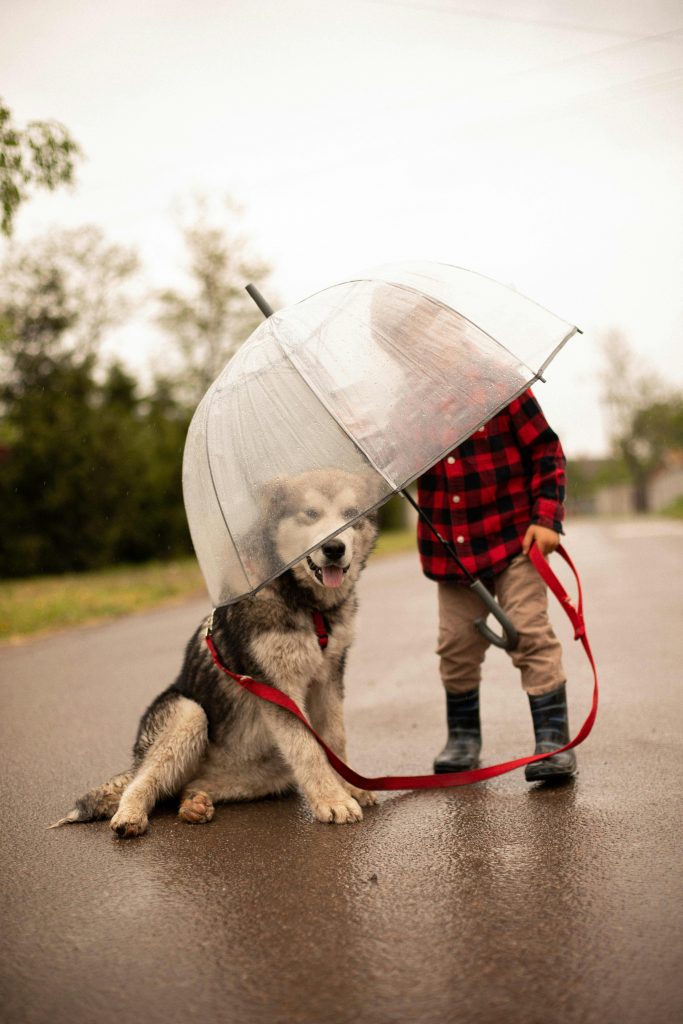
There’s something magical about the connection between a child and a dog. It’s the kind of bond that builds empathy, trust, and unforgettable memories. But it doesn’t happen by accident, it takes time, guidance, and most importantly mutual respect. Whether you’re bringing a new puppy into a home with kids, or introducing your child to an existing dog, setting the tone from the beginning is key to a peaceful, safe, and happy household.
Start with Education, For Both Sides
Children need to be taught how to interact with dogs just as much as dogs need to learn how to behave around children.
It is extremely important to teach your child:
. Not to approach dogs when they’re eating or sleeping;
. To avoid hugging the dog/puppy tightly or pulling ears and tails;
Teach your dog:
. That children are a source of good things like treats, playtime, gentle affection;
. How to remain calm during excited moments;
. To retreat to a safe space when overwhelmed.
Supervision Isn’t Optional
Even the most patient dog can become frightened or startled, and even the gentlest child can becomeoverly enthusiastic. Always supervise interactions, especially in the early days. Think of yourself as the interpreter, making sure both dog and child feel safe and understood. Moreover, in certain dog breeds that were historically selected for fighting or gripping behaviours, there exists a deeply ingrained instinct
to silence and neutralise a prey. In rare but tragic circumstances, this instinct can be unintentionally triggered by high-pitched sounds, such as the crying or screaming of an infant or toddler. When combined with stress, poor supervision, or a lack of understanding of canine behaviour, this can lead to devastating consequences. Sadly, news reports periodically remind us of such incidents, underscoring the importance of responsible ownership, informed supervision, and a realistic understanding of a dog’s innate behavioural drives.
Choose the Right Dog for Your Family
Some breeds are naturally more tolerant and affectionate toward children, but individual temperamentmatters more than labels. A calm, stable adult dog might be a better match for a young family than a high-energy puppy that bites and jumps. Rescues can be wonderful too, with the right guidance.
Create Boundaries for Harmony
Boundaries are good for everyone. Dogs should have a safe retreat, such as a crate, bed, or quiet room, where they can go when they need rest or space. Children should be taught to leave the dog alone in these areas.
What Dogs Teach Children
Having a dog teaches children:
. Empathy: Understanding what another being needs and feels;
. Responsibility: Feeding, grooming, and exercising a dog builds lifelong skills;
. Patience: Dogs don’t always listen the first time; (Neither do toddlers!)
. Communication: Dogs speak through body language, and learning to “listen” builds non-verbal communication skills.
Want to Know More?
If you want to deepen your understanding of your dog’s behaviour and build a stronger bond between your family and your four-legged companion, my book “Dog Training The Holistic Way” offers a wealth of insights for real-life scenarios. Available now on Amazon
I’d be so grateful if you could leave a review, it helps other families find support too.

No responses yet